REFERENCE LIBRARY
Understand VibePackr.
From architecture to operations.
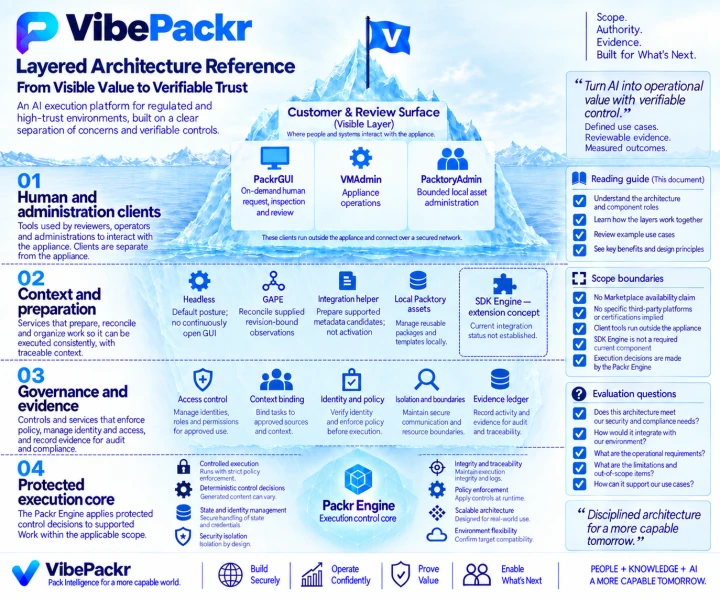
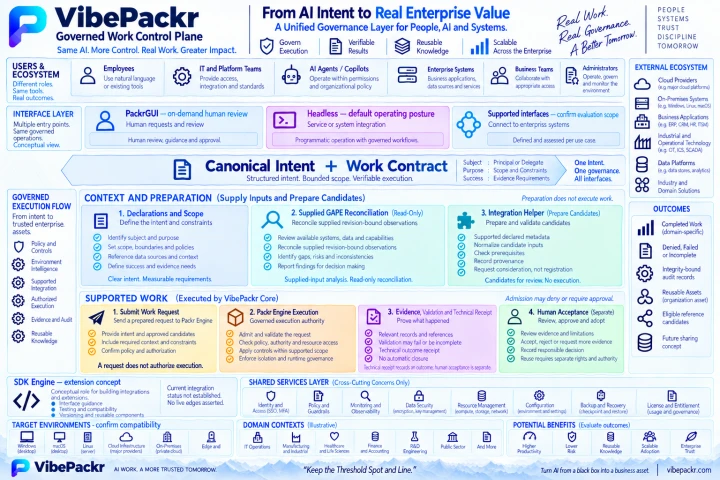
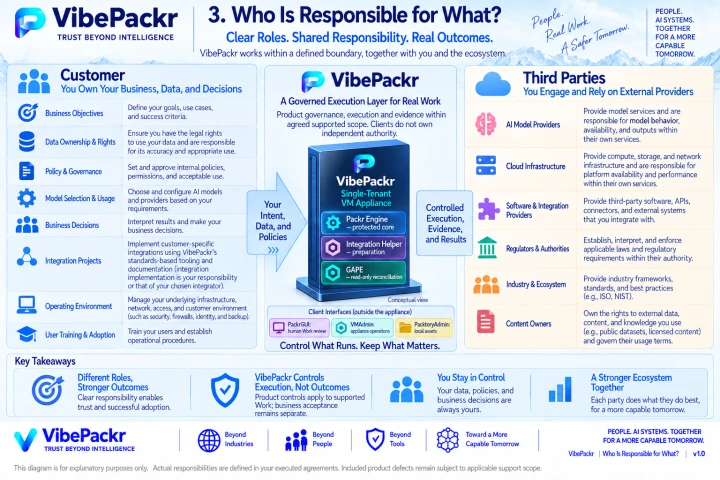
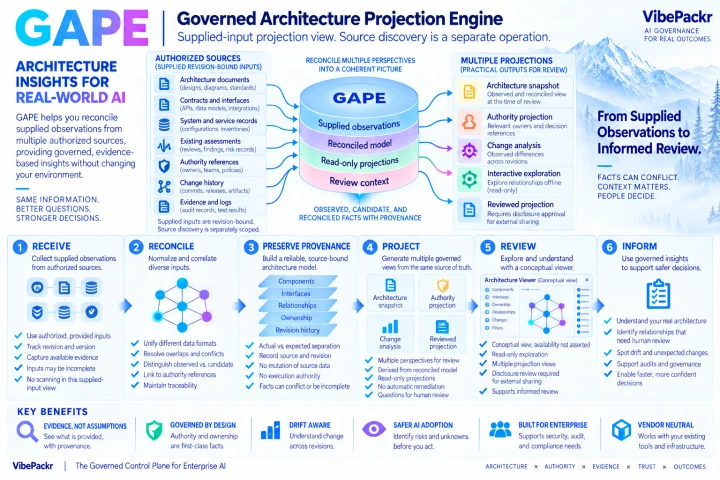
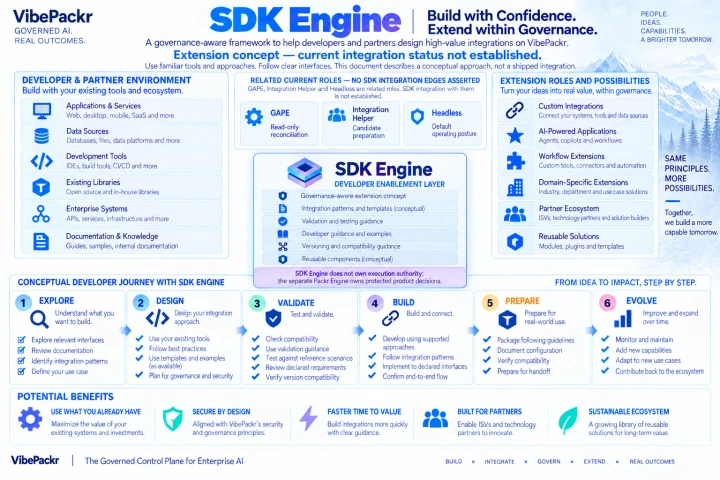
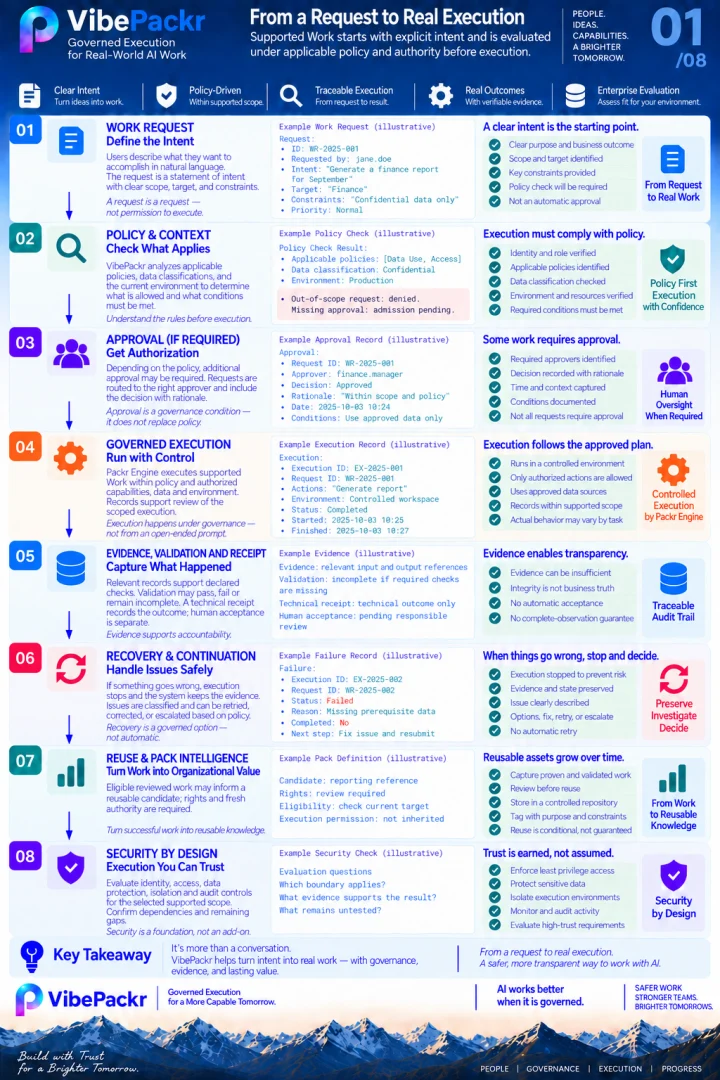
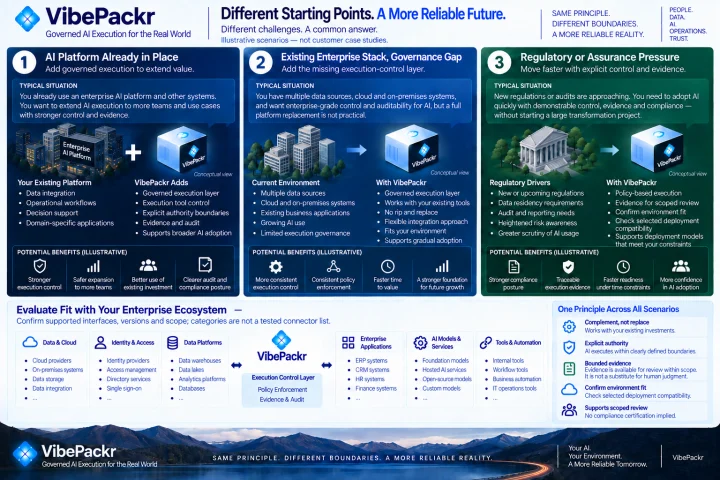
Start with these three diagrams: what sits beneath the interface, how the components connect, and who is responsible for what.
49 pages · 26 figures · English · PDF · 50 MB · 28 September 2026
Technical reference; release-specific alignment remains under review.
Conceptual reference plates and bounded roles follow the September 2026 English whitepaper. Confirm availability and supported scope for your evaluation.
NEW REFERENCE · TARGET OPERATING MODELYour environment. Your execution authority.
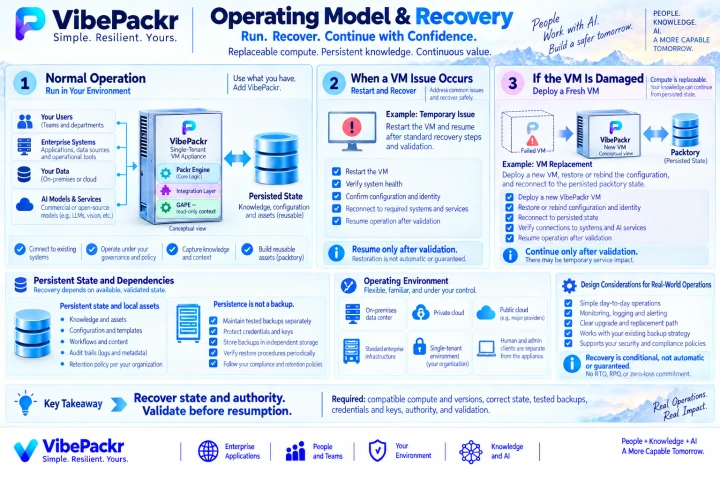
Compare the customer-controlled appliance target model with an illustrative provider-managed service. External AI processing, operating responsibilities and release-evaluation questions remain explicit.
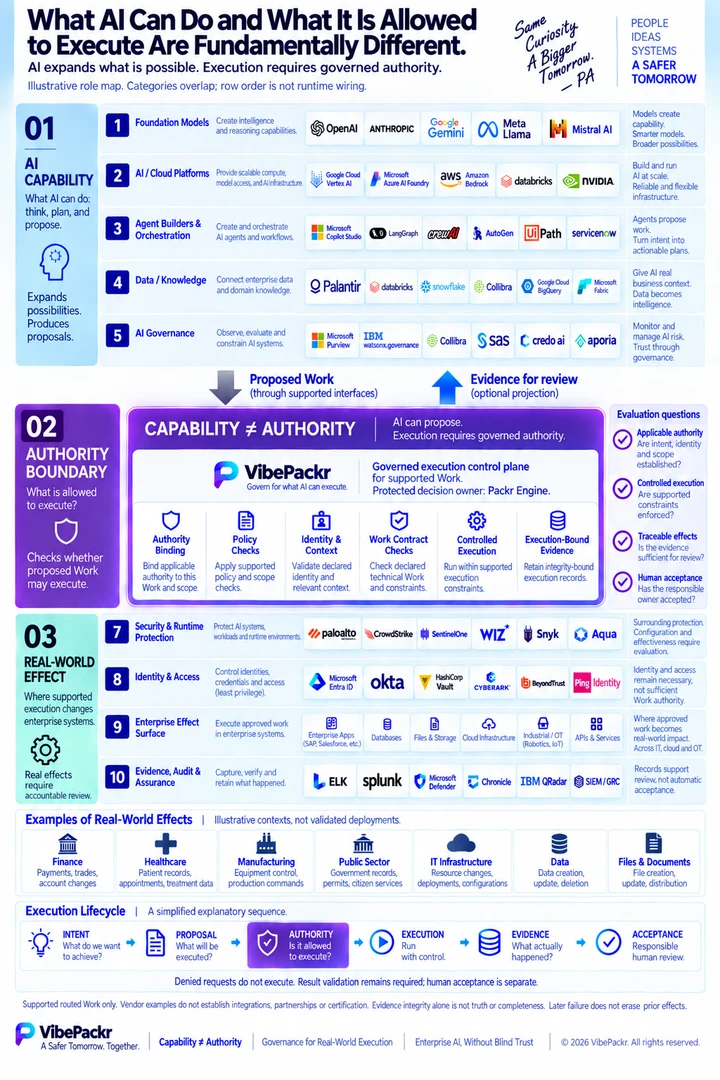
ILLUSTRATIVE CAPABILITY / AUTHORITY MAPCapability is not authority.
AI can propose. Execution requires governed authority. Explore the boundary between AI capability and real-world effects, and why a successful technical result is not sufficient evidence of authorization.
Explore the detailed reference → 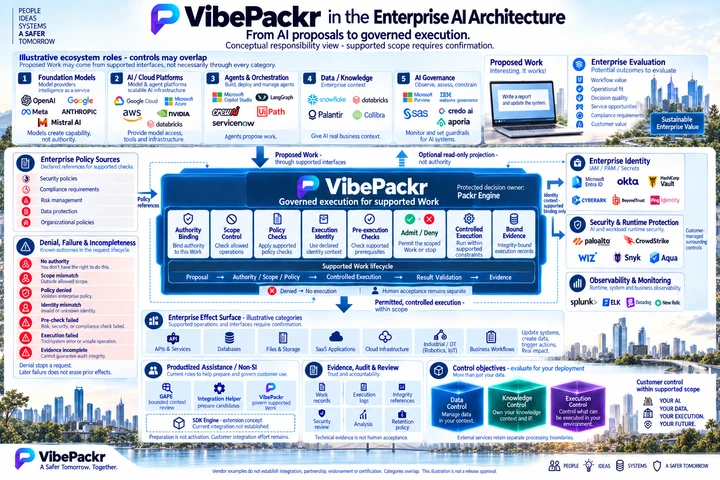
CONCEPTUAL RESPONSIBILITY VIEWWhat does VibePackr govern?
A supported request reaches the protected Packr Engine with declared context, scope and applicable authority. Existing identity, security and observability remain surrounding controls. Preparation, execution, outcome review and human acceptance are related but separate responsibilities.
Explore the detailed reference → Vendor names and logos identify illustrative examples, not confirmed integrations, partnerships, endorsements or certifications. Categories overlap. Availability and supported interfaces require confirmation. Then compare the deployment and trust boundaries →
Architecture & components
For architecture and integration review
Execution & responsibility
For security, governance and ownership discussions
Evaluation & operations
For evaluation planning and operational readiness
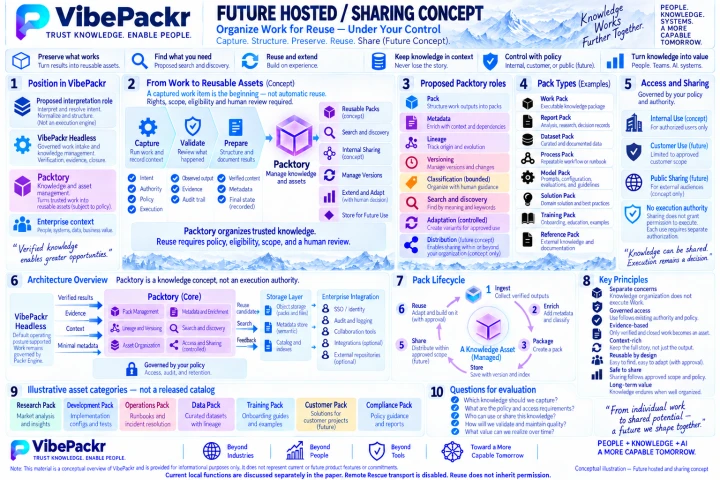
Future concepts
Exploratory architecture — not current availability
Not current availability. Future hosted/sharing concepts are separate from bounded local Packtory; remote Rescue transport remains disabled. These materials do not announce a release date.